
Cheque Bounce Lawyer in Delhi high court: Legal Notice, Section 138 and Court Procedure
A cheque is commonly used for business transactions, personal loans, payments to suppliers and settlement of outstanding dues. When a cheque is returned unpaid, it can create financial difficulties and lead to legal proceedings. Understanding the applicable law, deadlines and available remedies is essential for both the person who issued the cheque and the person […]
Supreme Court on Cheque Bounce Cases: Notice, Limitation and Criminal Liability
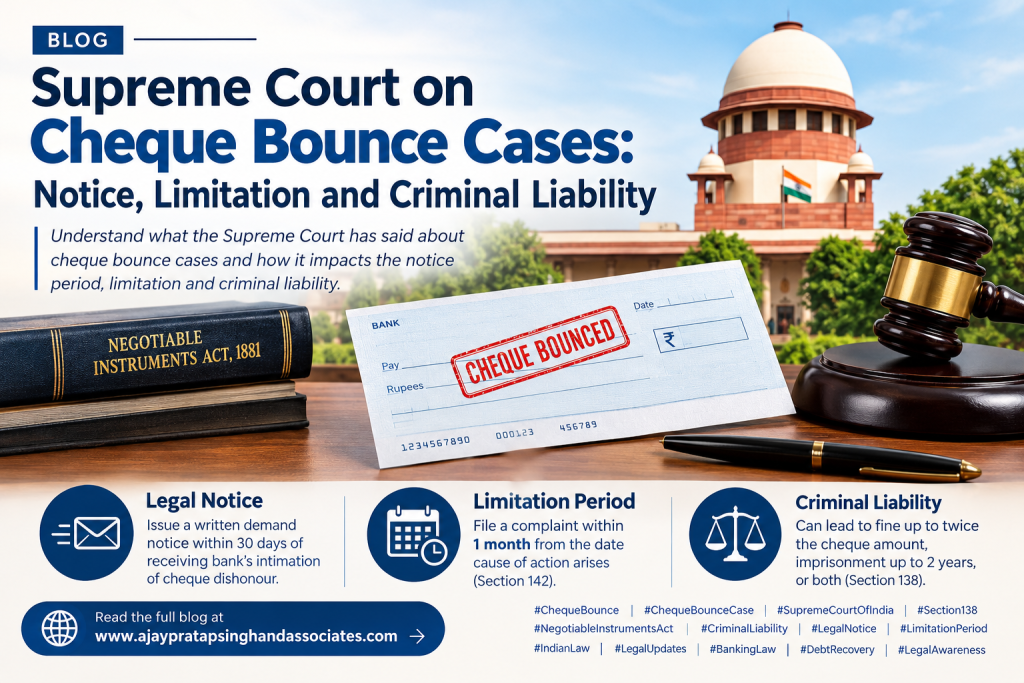
Supreme Court on Cheque Bounce Cases: Notice, Limitation and Criminal Liability is an important topic for individuals, businesses, creditors and financial institutions dealing with cheque dishonour disputes in India. A cheque is commonly used to make payments for business transactions, loans, services and other financial obligations. When a cheque is returned unpaid, the consequences may […]
Cheque Bounce Lawyer in Delhi high court: Legal Notice, Section 138 and Court Procedure
A cheque is commonly used for business transactions, personal loans, payments to suppliers and settlement of outstanding dues. When a cheque is returned unpaid, it can create financial difficulties and lead to legal proceedings. Understanding the applicable law, deadlines and available remedies is essential for both the person who issued the cheque and the person […]
Cheque Bounce Lawyer in Delhi High Court: Legal Process, Notice and Section 138 Cases

Cheque Bounce Lawyer in Delhi High Court: Legal Process, Notice and Section 138 Cases A cheque being returned unpaid can create serious financial and legal consequences for both the person who issued the cheque and the payee who is seeking recovery. Under the Negotiable Instruments Act, 1881, dishonour of a cheque in circumstances covered by […]
Cheque Bounce Under Section 138 NI Act: Everything You Need to Know
Cheque bounce cases are among the most common financial and legal disputes in India. Whether it is a business transaction, personal loan repayment, partnership dealing, or payment for services, a dishonoured cheque can create serious financial complications for both parties. To protect the credibility of cheque transactions and maintain trust in the banking system, the […]
Cheque Bounce Due to Insufficient Funds: Legal Consequences Explained
A cheque bounce due to insufficient funds is one of the most common financial disputes faced by individuals, businesses, traders, and companies in India. When a cheque issued by a person or organization is dishonoured by the bank because the account does not contain adequate balance, it can lead to serious legal and financial consequences […]
Cheque-Bounce
When Payments Fail: Legal Remedies for Cheque Bounce Cheque transactions are built on trust and credibility, especially in business and personal financial dealings. However, when a cheque is dishonoured due to insufficient funds, a closed account, or signature mismatch, it results in a cheque bounce, creating serious legal consequences for the drawer. Indian law provides […]
Cheque Bounce Case? Fight Back with Strong Legal Representation
In the world of business, trust and financial commitments go hand-in-hand. When someone issues a cheque, it symbolizes assurance — the assurance of payment, honesty, and a smooth financial transaction. However, when that cheque gets dishonored or returns unpaid by the bank, the consequences go far beyond financial loss. It damages trust, disrupts business flow, […]
Cheque Bounce Disputes: Your Legal Shield Under Section 138
Financial transactions rely heavily on trust, especially when payments are made through cheques. However, when a cheque gets dishonoured due to insufficient funds, technical errors, or closure of account, it leads to a cheque bounce — a situation that may result in financial loss and legal complications. To protect the interests of the payee, Section […]
When Payments Fail: Understanding Cheque Bounce and Legal Remedies
A cheque is considered one of the most trusted methods of financial transactions. But when a cheque bounces, it not only disrupts the payment process—it can also lead to serious legal consequences. Understanding why cheques bounce, what the law says, and how you can protect your rights is essential for both payees and drawers. What […]